Behind the Blend: Spotlight on Rajgira AKA Amaranth
Share
🌱 Why Rajgira Matters Beyond Fasting Days
In most Indian homes, rajgira (amaranth) makes its yearly appearance during Navratri or Ekadashi fasting. It shows up as laddoos, chikki, or puris — and then quietly disappears until the next festival.
But here’s the truth: rajgira isn’t just a fasting grain. It’s a functional grain packed with protein, calcium, fibre, and antioxidants that support families every single day — from kids’ growth to elder bone strength.
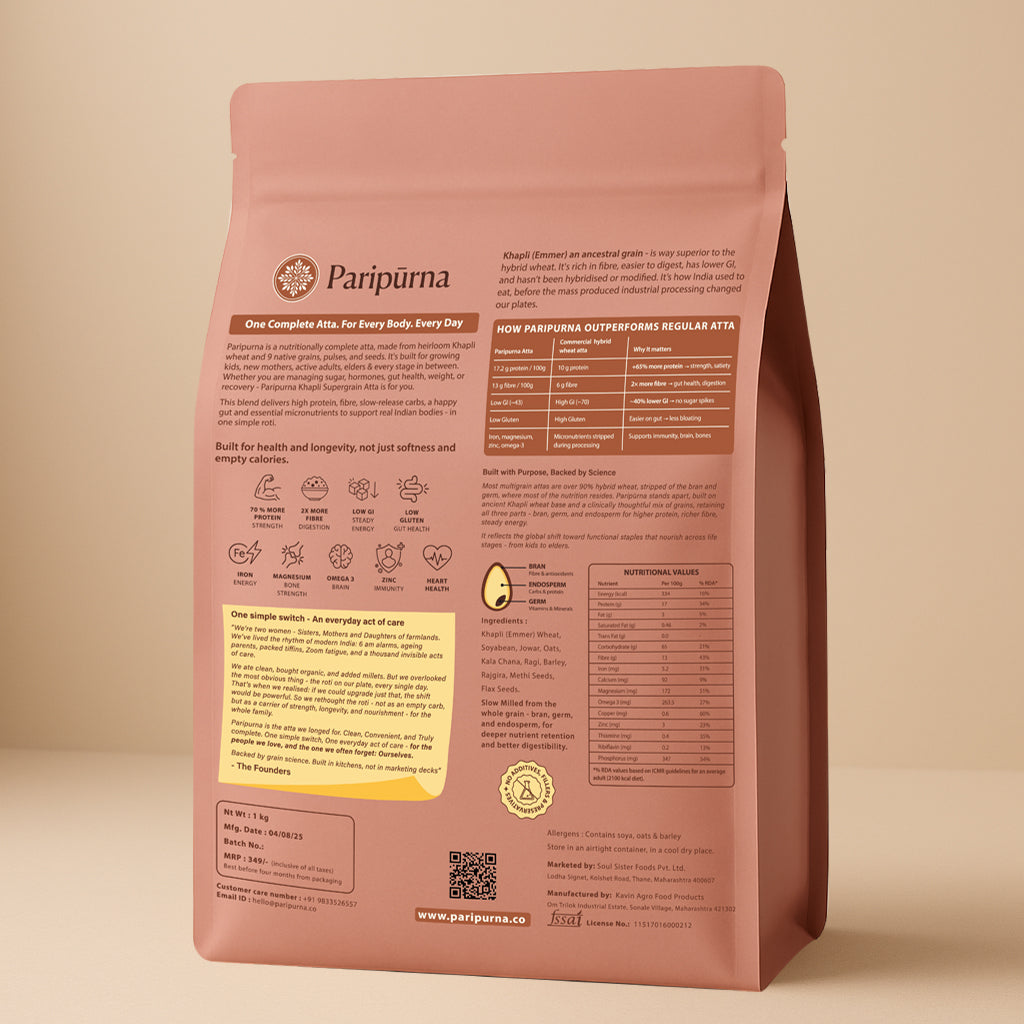
At Paripūrna, we chose to make rajgira part of our blend so its power isn’t limited to rituals, but woven into your family’s everyday meals.
💪 Rajgira’s Nutritional Strengths (Backed by Science)
1. Protein for Growth & Repair
- Rajgira has ~14g protein per 100g — higher than many cereals.
- Supports children’s growth, muscle repair in adults, and satiety for weight control.
2. Calcium for Bones
- One of the richest plant-based calcium sources.
- Supports bone density in elders, teeth strength in kids, and hormone balance in women.
3. Fibre & Antioxidants for Immunity
- High fibre = better digestion, gut microbiome health.
- Antioxidants protect against inflammation, support immunity.
4. Gluten-Free, Light & Easy to Digest
- Naturally gluten-free, making it easier on the stomach.
- Perfect for families with digestion concerns or wheat sensitivity.
👉 This is why rajgira has been called “amaranth” — from the Greek word meaning “everlasting strength.”
🌾 Why We Added Rajgira to Paripūrna
Most multigrain attas use flashy ingredients in trace amounts. In Paripūrna, every grain is chosen for a functional reason:
- Khapli wheat (protein, fibre, low GI).
- Soyabean (amino acids).
- Flaxseed (Omega-3).
- And Rajgira → for strength, calcium, and immune resilience.
By combining it with other grains, rajgira becomes more than a “fasting snack” — it becomes an everyday nutrient foundation.
❓ FAQs People Ask About Rajgira
Q: Is rajgira really healthier than wheat?
A: It’s different. Wheat is carb-rich, rajgira is protein- and calcium-rich. The synergy of both in Paripūrna makes a balanced, functional atta.
Q: Can children eat rajgira daily?
A: Yes. It supports growth (protein + calcium) and is safe for everyday meals. Many paediatric nutritionists recommend amaranth in kids’ diets.
Q: Is rajgira good for women with PCOS or anaemia?
A: Yes. Its iron, magnesium, and calcium content help support hormonal balance, while high fibre supports steady energy release.
Q: How can I include rajgira if I’m not fasting?
A: Through multigrain blends (like Paripūrna), or by adding rajgira flour into pancakes, crackers, or laddoos.
🍴 Everyday Ways to Use Rajgira (Beyond Fasting)
- Add to multigrain rotis → complete daily protein.
- Mix into snack dough → cutlets, crackers, or thalipeeth.
- Use in energy laddoos with jaggery and nuts → for kids’ tiffins.
- Cook as a porridge → calcium-rich breakfast.
💬 A Reflection
“For years, we saw rajgira only as a fasting grain. But when we studied it closely, we realised — this is exactly what our everyday plates are missing. Strength, satiety, and nutrients that modern hybrid wheat can’t give alone.
Rajgira is not a seasonal visitor. It’s meant to be an everyday guardian.”